

Arcade design lives in the first input.
Arcade games are easy to describe badly. Fast, colorful, and “addictive” says almost nothing. We focus on the mechanics that make a short session worth repeating.
Input is tested before anything else. A game can look polished and still feel wrong if movement is vague, buttons lack feedback, or the camera fights the player.
Movement & Input
We check whether the game communicates danger, rewards, timing, and failure clearly enough for the player to learn from each attempt.
Feedback & Readability
Difficulty is judged together with restart speed. Hard games can feel fair when recovery is quick; mild challenges can feel exhausting when every failure creates friction.
Difficulty & Restart
First impressions reveal onboarding and control clarity, but they are not enough to judge replay value.
Session One
By the third session, repetition becomes visible. We look for mechanic development, route variation, enemy variety, scoring depth, and meaningful mastery.

What we test
The published review explains what the game does, who it suits, where it becomes repetitive, and whether the central loop earns another run.
Control response before spectacle.
Session Three
Good arcade design does not need a giant feature list. It needs immediate control, readable consequences, and a reason for the next attempt.
- Input Latency
- Movement Precision
- Button Feedback
Final Review
Our coverage includes platformers, racers, rhythm games, score attacks, compact action games, puzzle arcades, and hybrids that preserve a clear session loop.
- HUD Readability
- Audio Cues
- Failure Clarity
Arcade Review Desk
We note the tested platform and version whenever that detail can materially change the experience.
- Restart Speed
- Difficulty Curve
- First Session

The review workflow
Expect practical comments on controls, checkpointing, restart times, visual noise, difficulty spikes, and replay structure.
Controls
This page is an editorial archive, not a store. Links are provided for context and discovery; availability can change.
Pacing
If a review no longer matches the current build, send us the title and platform through the contact page.
Why replay matters
| Review Metric | Our Methodology | Outcome Objective |
|---|---|---|
| Oil Purity Audit | Microscopic particulate screening and chemical acidity testing (TBN analysis). | Internal component longevity through friction reduction. |
| Braking Surface Integrity | Thermal stress profiling and laser micrometer thickness mapping. | Predictable, high-torque deceleration without fade. |
| Forced Induction Health | Smoke-leak detection and turbine shaft play measurements. | Optimized manifold pressure and throttle response. |
| Chassis Flex Audit | Structural integrity mapping and subframe fastener torque verification. | Elimination of parasitic vibration and handling drift. |
Genres in rotation
Replay
Independent game coverage built around real play, clear criteria, and useful context instead of manufactured authority.
Arcade and browser game reviews, practical guides, and curated recommendations for quick-to-start games.
Context
Independent online publication
No physical storefront
Before you choose a game
No walk-in hours
Coordinates
We do not rate games by marketing budget, publisher size, or visual polish alone.
Workshop Hours
A compact mechanic can outperform a massive content list when it produces better decisions and cleaner feedback.
Direct Signal
Our strongest recommendations usually share three traits: immediate clarity, satisfying input, and a loop that changes as the player improves.
Intake Requirement
Games with intrusive real-money wagering mechanics are outside the scope of this publication.
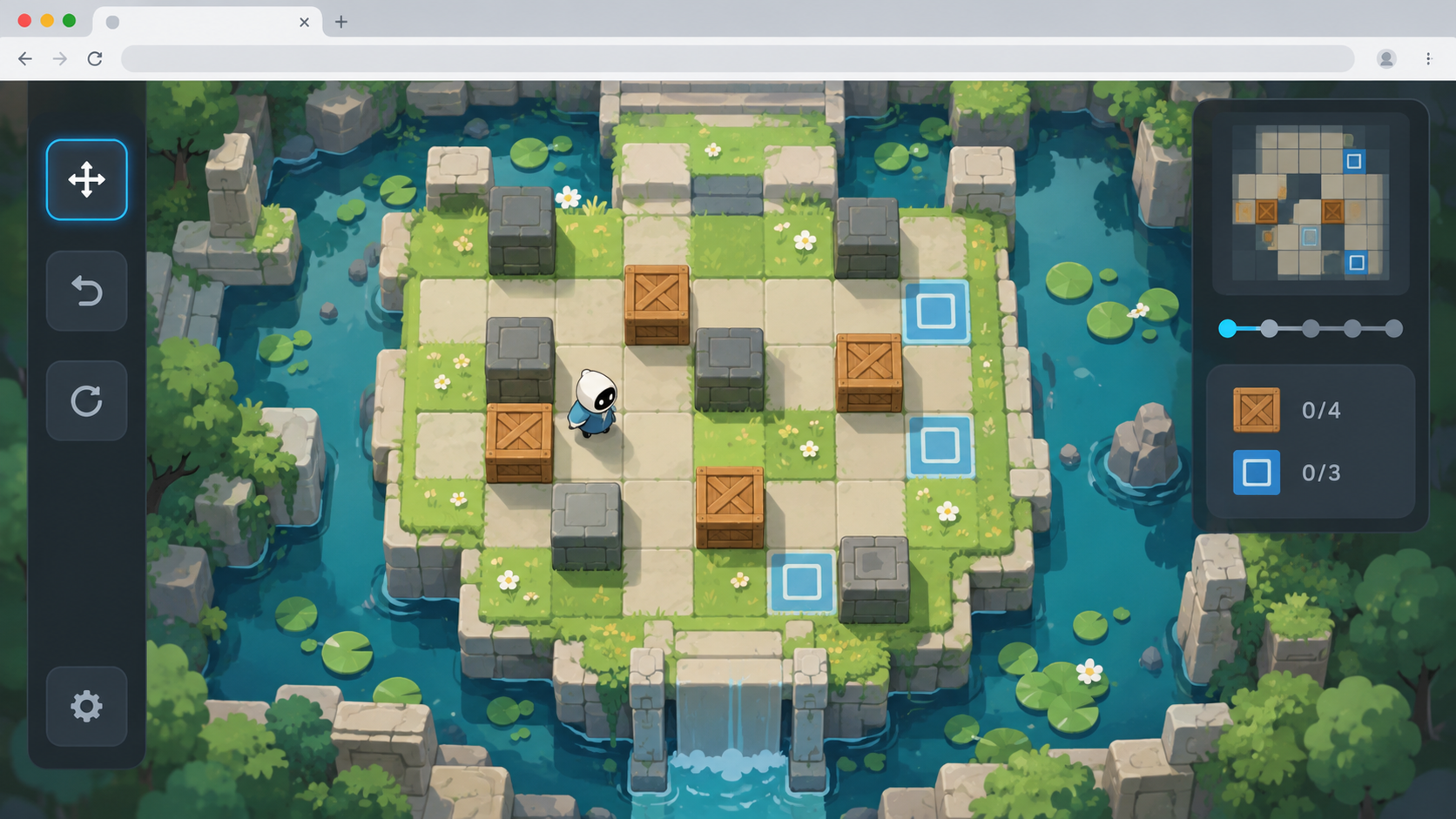
Recent arcade notes
New arcade notes appear when we finish meaningful testing rather than on a fixed quota.